We Can All Do Something
“I am only one, but I am one. I cannot do
everything, but I can do something. And
because I cannot do everything, I will not
refuse to do the some-thing that I can do. And by the Grace of God, I will.”
―Edward Everett Hale (3 April 1822 – 10 June 1909), an American author and Unitarian clergyman.
That quote is an important reminder that all individual actions can make a difference. We are all capable of doing some thing(s).

Create a Saving Democracy Action Plan
There are numerous individual actions that can make a difference during the next few years. For example:
*Don’t procrastinate. Whatever your political affiliation, if you believe that we’re shifting ever closer to an authoritarian form of government and want to get involved, start today. There are many ways to help protect our Democracy (see below). You will help make a difference but also be comforted knowing that when the struggle is over, you didn’t sit on the sidelines during a crucial time in our nation’s history.
*Understand our country’s current condition. While it’s tempting to avoid the daily barrage of depressing news, we must be willing to act, and a basic awareness will help us do so. Read a summary of Project 2025. Review “suitable” news publications/websites.
*Analyze/Critique the MAGA Acronym. Make an objective, thoughtful evaluation of the infamous phrase “Make America Great Again.” The dubious call to action that was first introduced in 2016 and somehow became a popular rallying cry, implies that there was a substantial need to reinvent/save America from certain peril. The inventor of the phrase even referred to our home as a “third world country.” But we can emphasize that the United States has always been Great. It is the “land of opportunity,” where unlike many other countries, citizens have so many rights and until recently have never feared being governed by a dictatorship. Of course, America isn’t perfect. There are challenges and problems as there have always been—including excessive gun violence, racism/antisemitism of varying degrees, inconsistent immigration policies, and inevitable economic fluctuations. But to suggest that a marginally successful celebrity-businessman was going to be our savior and claim to be the first POTUS in history to realize grandiose achievements is just wrong. But again, judge for yourself.

*Be as objective as possible. Whatever your usual political affiliation, try to base your views on what is best for the country and all of its people. Be willing to change your opinion about particular issues.
*Monitor the Falsehoods—Keep a log of Administration-related statements you feel might be considered prevarications (lies). No need to judge until you get a rather lengthy list and then compare to a fact-check program (See Resources). Then do some more thinking and determine whether or not that is acceptable behavior.
*Reach out to your network of like-minded friends, work colleagues, former neighbors, college alumni, and others. Relate your thoughts on how we need to work together to help restore this country’s usual generous soul and humanity.
*Do your own research. Before accepting an Administration official’s (or anyone else’s) statement as truth, check it against FactCheck.org (a project of The Annenberg Public Policy Center) or another credible source and then make up your mind.

*Create your A Step Too Far Checklist of bills, executive decisions, and other actions that “cross the line,” that might make you move in a different direction. For example, is it okay for a POTUS to publicly claim that any actions (lawful or not) are fine as long as they align with his views of what America should be? Is it right for America to withdraw from NATO (thus turning our backs on loyal allies)? Should we be bothered that some of the most sensitive Cabinet posts have been filled by extremely unqualified people? Any problem with the president agreeing with a dictator that Ukraine started the devastating war? Should an unelected tech billionaire be allowed to decimate entire Departments? We all have our biases and can overlook many behaviors/actions as being “that’s just the way he is….” (as we have with other leaders), but there must be a limit.
*Use your social media presence. An easy first step is to add a brief message on your email signature block (Best wishes for a unifying, less divisive America). You can be even more proactive by sharing your concerns and suggestions on Facebook (or an alternative) and Instagram. You have the option of simply venting, by reposting news reports and other items, or also adding specific action ideas. Depending on your approach, you may receive negative responses and/or lose some of your “friends,” so be prepared for that result. In addition, if you have the time and are comfortable doing so—you can write your own regular (weekly/monthly) blog. Do an Internet search for companies that offer free blog set-up. Whatever you do, make sure not to spread conspiracy theories or other misinformation.
*Participate in a peaceful protest march or other demonstration.
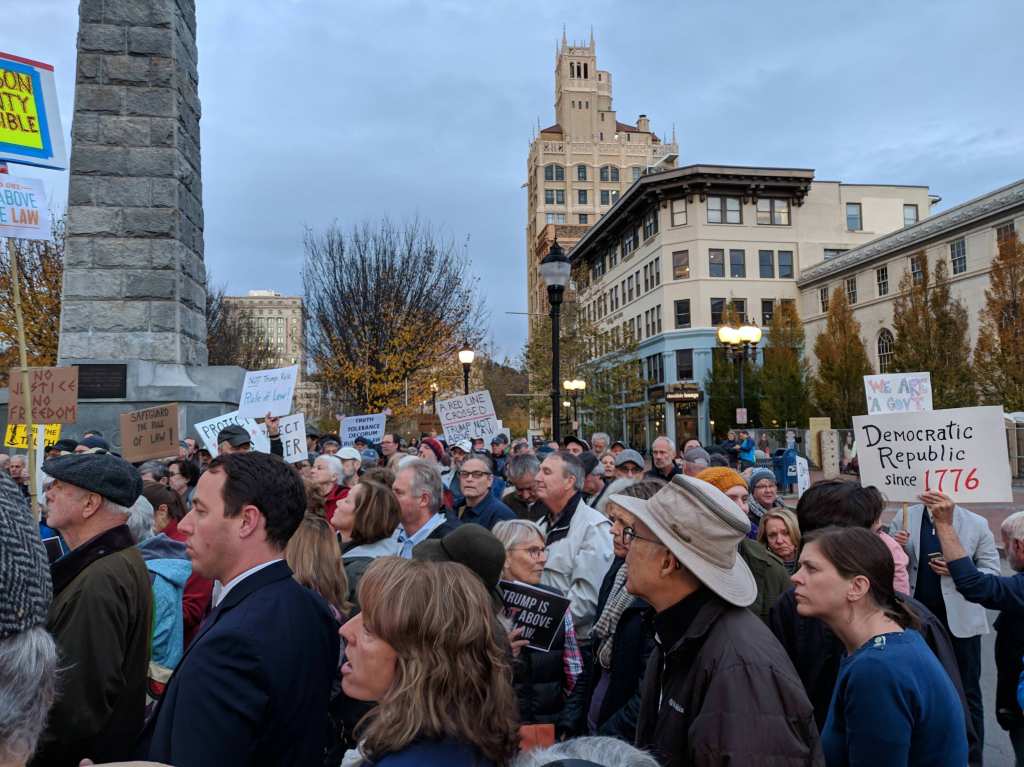
*Volunteer on a city or county human rights or inclusivity council/committee where you can share your ideas on unity and positivity.
*Be a uniter, not a divider. You may be able to have a friendly discussion about current events with a relative or workmate who previously has had the opposing viewpoint but is now a “fence sitter” and receptive to a change. If not, it may be best to avoid a negative confrontation. Of course, it’s a personal choice whether or not to “cancel” a friendship with someone who has extremely divergent views.
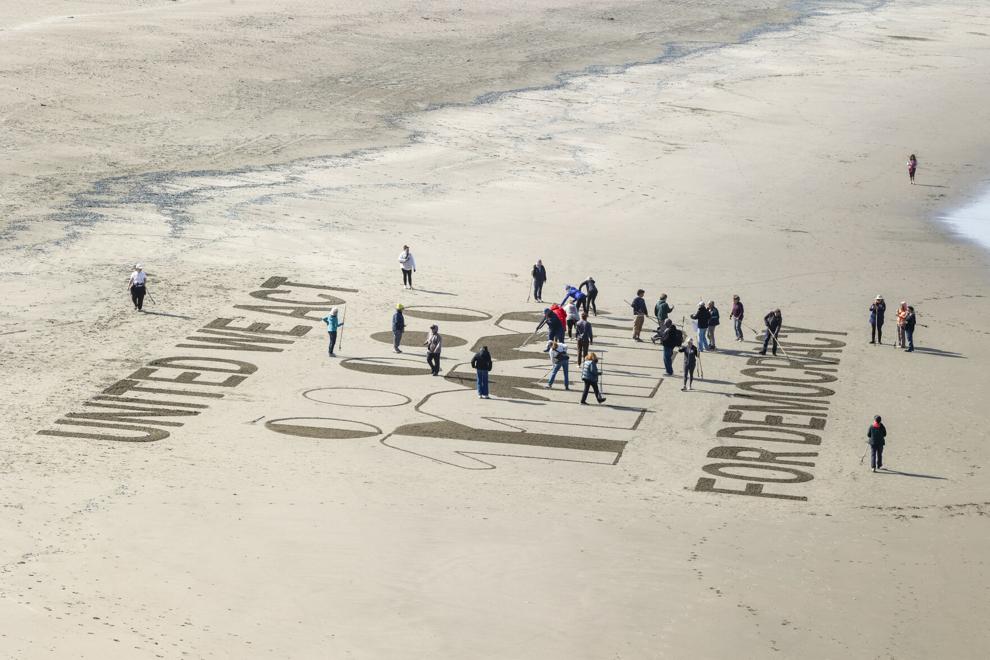
*Create A Visible Display—A unique display can generate attention and support. Besides the basic rally sign and billboards/airplane banners (which are expensive), consider other options that make a powerful statement (but aren’t threatening or profane). For example, here volunteers work on the sand art message “United We Act For Democracy” by artist Andres Amador on Ocean Beach in San Francisco on Friday, May 16, 2025. (San Francisco Examiner)
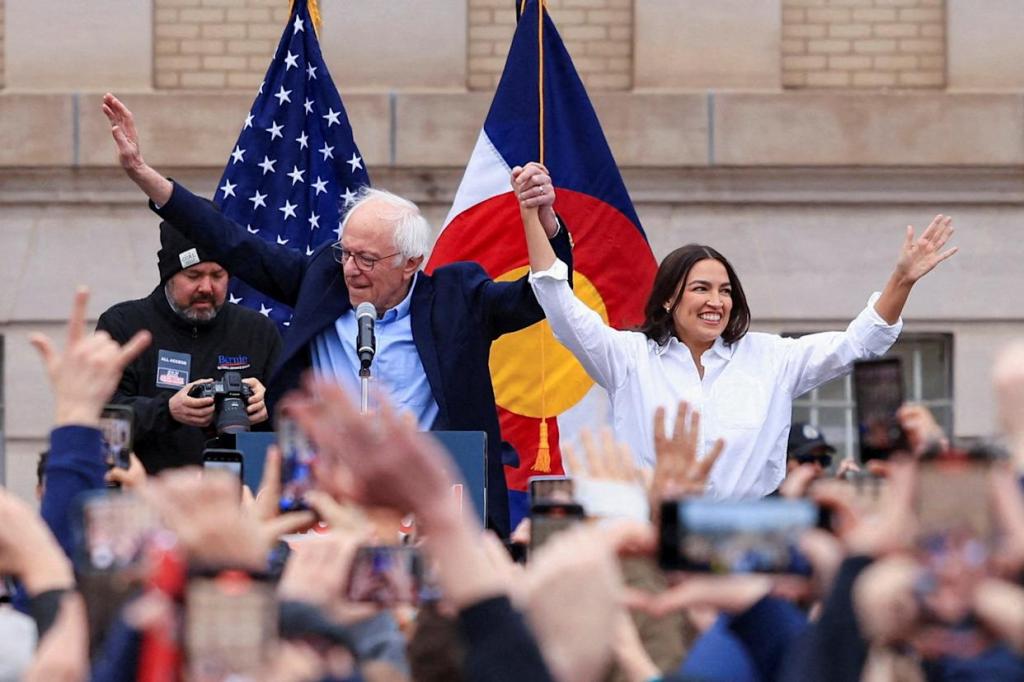
*Attend a rally where speakers will discuss the ways we can help protect democracy and denounce dictator, kinglike behavior.
*Join or help form a local community group dedicated to preserving our democracy. Offer your talents, which could include making signs, letter writing, social media, and organizing events.

*Call and write letters/emails to your Congressional Representatives and Senators—urging them to oppose bills, executive orders and other actions that harm America’s democracy. You can find their contact information at: http://www.congress.gov/members/find-your-member
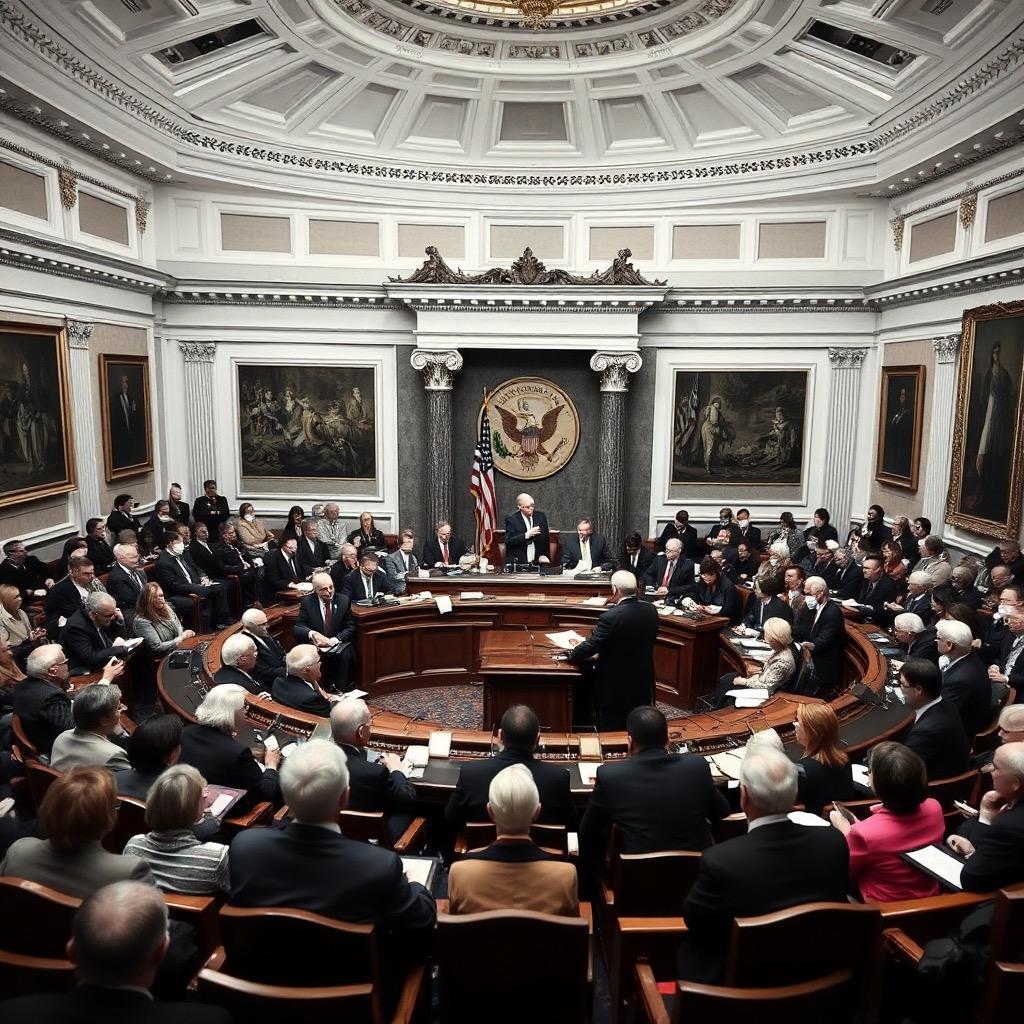
*Write a letter to the editor of your local newspaper(s) highlighting the importance of holding on to our principles of democracy.

*Meet, Greet and Advise—The Congressional recess from August 8 to September 6, 2025 is the ideal time to meet with congressmen and women, Senators, and/or their staffs. Visit their nearby district offices and share your concerns about critical issues. Be polite, but firm. Remember, these people work for us. Indivisible (www.indivisible.org) offers information on the way to work with both R and D Congress people.
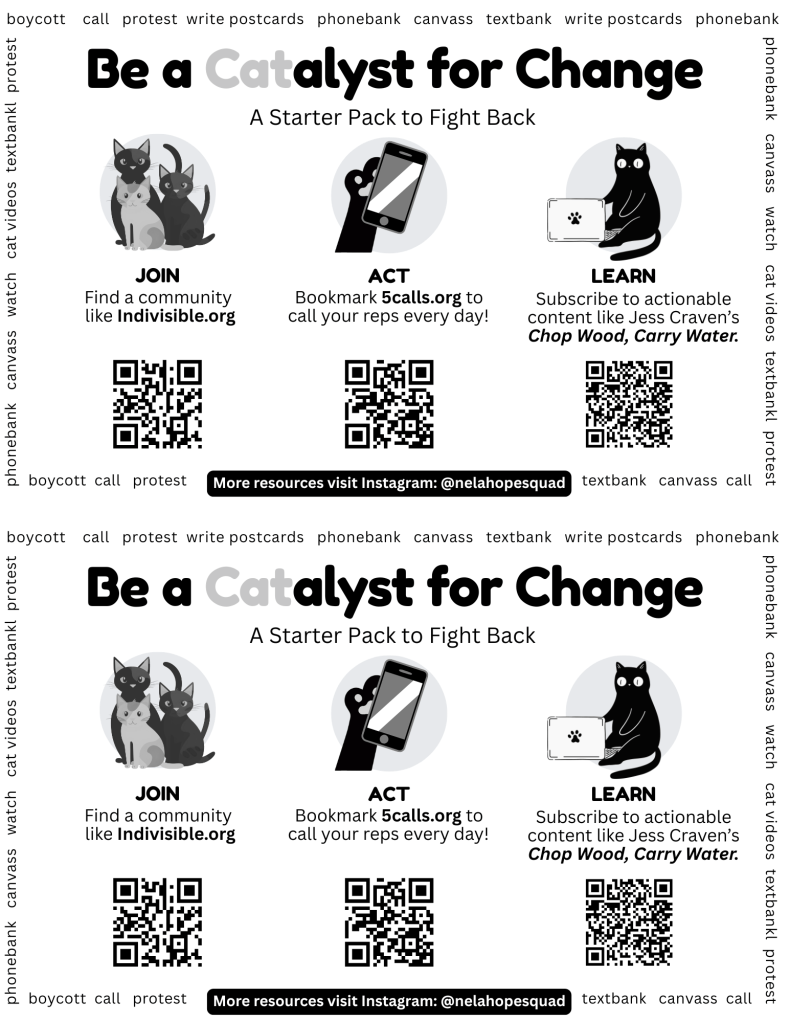
*Create Your Own Resource Page: Develop an action step flyer for your group members/others. For example, here are two great pieces created by Indivisible groups. The top one is from Indivisible Rosedale Huddle and the second is by the NELA Hope Squad. You can use something similar or adapt to make your own. (Thanks to both groups for sharing their material.)

*Share your opinion with the Supreme Court Justices. Call or send an email encouraging them to strive to base their decisions on the Constitutional guidelines/legal merits and not their loyalty to and fear of the White House resident. It may seem that they don’t listen to us, but hopefully the nine top judges will eventually hear our loud voices. For time-sensitive or urgent matters related to the Supreme Court—such as a pending decision regarding the Administration’s actions–contact the Public Information Office (202/479-3211) and leave a message. (The Supreme Court does not have a public comment phone line.) For general questions and comments that aren’t time-sensitive, you can email the Public Information Office at pio@supremecourt.gov.
*Pass on your values of tolerance and friendship to your children. We don’t need more school bullies who grow up to be older, more powerful bullies.

*Support national organizations that are fighting the dictatorship forces. Make a donation if you can or assist with their public outreach efforts.
*Attend a town hall gathering or other meeting that focuses on current events. Let your voice be heard.
*Sign a petition that takes a stand against un-democratic and/or illegal actions.
*Plan your vote in the upcoming mid-term elections on November 3, 2026. You may even decide to help with “get out the vote” efforts. Start planning ahead–research who is running for office in your state and district and how you can support the BEST candidates. For more information on the 2026 election, see http://www.usa.gov/midterm-elections
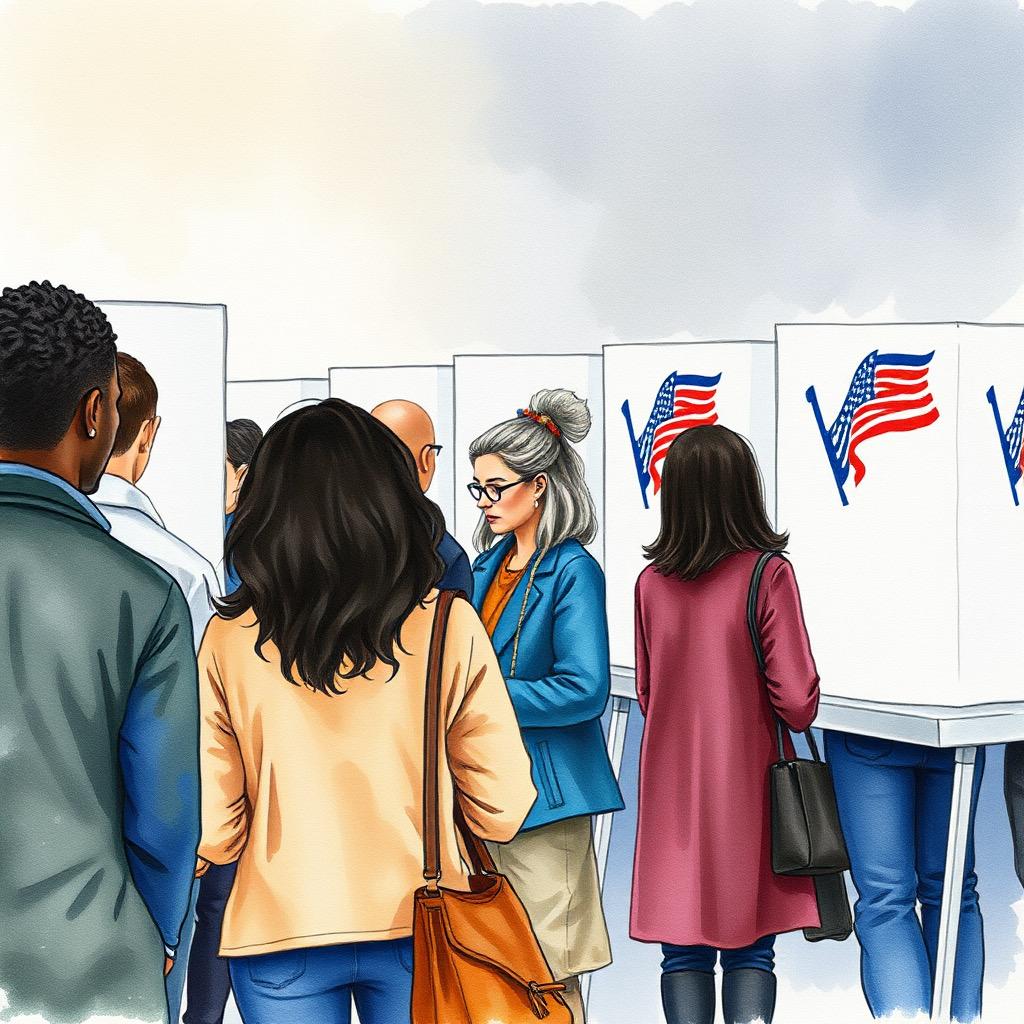
*Speaking of the 2026 mid-term election, it’s not too early to begin encouraging young voters to participate. Emphasize to your children, grandchildren, and other first-time voters (and/or those who didn’t vote in 2024) the importance of voting for the best candidates for their Congressional Representatives and Senators. Share your own views (as appropriate) and tell them to do the necessary research regarding the candidates’ backgrounds and positions on the most consequential issues. Suggest they make up their own minds and not be overly impressed/swayed by any one group. Stress that every vote makes a difference. (See the Mid-Term Elections and Resources pages for more information.)
*Learn about even more “call to action” strategies by attending Zoom/other calls hosted by various organizations such as ACLU (People Power— http://www.aclu.org) and Indivisible (www.indivisible.org). You can sign up to receive announcements about future online gatherings.
*Keep a journal of your fight for democracy. This will enable you to reflect on how effective specific actions are and how you can adapt them for the future. In addition, this log will be a positive reminder that you did everything you could to help make a difference in the challenge to make America normal again.
*Find a balance and stay positive. While we’re involved in this pivotal Save Our Democracy Campaign, it’s natural to feel overwhelmed at times. The barrage of daily reports and questionable activities can make us disheartened and angry. But we have to remind ourselves that this is a marathon, not a sprint. We can’t afford to burn out prematurely and walk away. To help alleviate some of the stress factors, we need to look after our “inner selves.” For example, you can exercise, meditate, participate in your regular hobbies/interests, and pray. There are many good articles on the subject, including this Time column: https://time.com/7270232/changing-yourself-overwhelming-world-events-essay/
Starting today…we can all do something.
###
******
 Return to a Decent, Normal America